Creatine is one of the most researched and widely used sports nutrition supplements available today. Popular with athletes, bodybuilders, gym enthusiasts and recreational exercisers alike, creatine has become a staple supplement for people looking to support high-intensity exercise and strength training. Despite its popularity, many people remain unsure about the different types of creatine available and which product represents the best choice.
This buying guide explains the different forms of creatine, what to look for when comparing supplements and how to find the best value when shopping online.
What Is Creatine?
Creatine is a naturally occurring compound found primarily in skeletal muscle. It helps the body regenerate adenosine triphosphate (ATP), which provides energy during short bursts of high-intensity activity such as sprinting, weightlifting and explosive sports.
Although creatine is naturally present in foods including red meat and fish, many active individuals choose supplements to increase their daily intake conveniently and consistently.
Why Is Creatine So Popular?
One of the reasons creatine remains so popular is its simplicity. It is available as powders, capsules, tablets and flavoured drinks, making it easy to incorporate into most nutrition plans. Modern products are also available in unflavoured versions that can be mixed into protein shakes or other drinks.
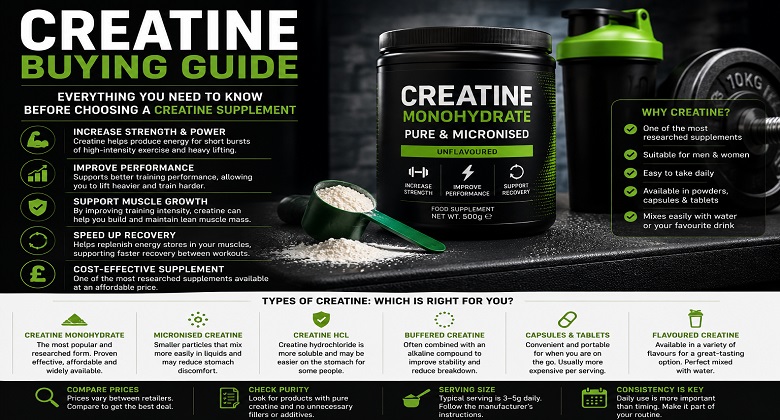
Creatine Monohydrate
Creatine monohydrate is by far the most common form and is widely regarded as the benchmark against which other forms are compared. It is affordable, widely available and found in products from virtually every major sports nutrition brand.
Micronised Creatine
Micronised creatine uses smaller particles that mix more easily with liquids. Many users prefer micronised products because they dissolve more readily and leave less residue in the shaker.
Buffered and Alternative Forms
Various alternative forms of creatine have appeared over the years, including buffered creatine, creatine hydrochloride (HCl) and creatine blends. These products often claim advantages such as improved mixability or convenience, giving consumers a wider choice depending on personal preference.
Creatine powder generally provides the best value for money and is easy to add to water, juice or protein shakes. Capsules and tablets offer greater convenience for travel or work but are often more expensive when comparing equivalent serving sizes.
Choosing a High-Quality Product
When comparing creatine supplements, consider ingredient purity, serving size, manufacturing standards and the reputation of the brand. Many premium products contain pure creatine with no unnecessary fillers, flavours or added ingredients.
Some formulations also include electrolytes or carbohydrates as part of more comprehensive sports nutrition products.
Flavoured or Unflavoured?
Unflavoured creatine remains the most versatile option because it can be added to virtually any drink. Flavoured products provide a more enjoyable taste for those who prefer drinking creatine on its own.
Comparing Prices
Creatine is available in containers ranging from small starter tubs to large bulk packs. Looking at cost per serving rather than overall price provides a much clearer comparison between products. Shopping around using a price comparison website can often uncover significant savings across different retailers.
Storage and Shelf Life
Most creatine supplements have a long shelf life when stored in a cool, dry place. Resealable containers help prevent moisture entering the powder and maintain product quality over time.
Final Thoughts
Creatine continues to be one of the most popular sports nutrition supplements available. Whether you choose traditional creatine monohydrate, micronised creatine or another formulation, comparing ingredients, serving sizes and prices will help you identify the best product for your training goals. With so many excellent options available, taking the time to compare products can ensure you receive both quality and value from your purchase.