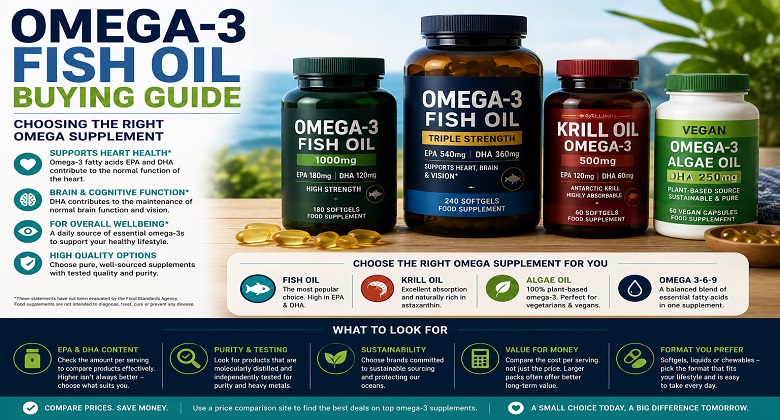
Omega-3 supplements have become one of the UK's most widely purchased nutritional products. Available as fish oil capsules, krill oil, algae-based supplements and combination omega formulations, they offer consumers an easy way to include omega fatty acids as part of a balanced diet.
With hundreds of products available from leading supplement brands, understanding the different types of omega supplements can help you make a more informed buying decision.
What Are Omega-3 Fatty Acids?
Omega-3 fatty acids are naturally occurring fats found in oily fish and certain plant sources. Modern supplements provide these nutrients in convenient capsule, softgel and liquid form, making them easy to incorporate into everyday routines.
Types of Omega Supplements
Fish Oil
Traditional fish oil remains the most popular option and is available in a wide variety of strengths and capsule sizes.
Krill Oil
Krill oil supplements have become increasingly popular and are often chosen as a premium alternative to conventional fish oil.
Algae Oil
Algae-derived omega supplements provide a plant-based option suitable for vegetarians and vegans looking for an alternative source.
Omega 3-6-9 Blends
Combination supplements include several different fatty acids within a single product and are available from many manufacturers.
Capsules, Softgels or Liquid?
Softgel capsules remain the most popular format due to their convenience and ease of swallowing. Liquid supplements can be useful for families or those who prefer not to take capsules, while some manufacturers also produce chewable options.
Understanding EPA and DHA
Many omega supplements list EPA and DHA content on the label. These values allow consumers to compare products more accurately than simply looking at total fish oil content.
Checking the nutritional panel makes it much easier to compare supplements across different brands.
Purity and Quality
Many premium manufacturers highlight purification processes, sustainability initiatives and independent quality testing. Looking for reputable brands with clear ingredient information can help when comparing products.
Pack Size and Value
Omega supplements are available in packs ranging from one month's supply to bulk packs containing several hundred capsules. Larger packs frequently reduce the cost per serving and can represent excellent value.
Comparing Prices
Prices vary significantly between retailers. Comparing cost per capsule, EPA and DHA content, serving size and overall pack value provides a far more accurate picture than comparing shelf prices alone.
Storage
Store omega supplements according to the manufacturer's recommendations, usually in a cool, dry place away from direct sunlight. Liquid products may require refrigeration after opening.
Final Thoughts
Whether you choose traditional fish oil, premium krill oil or plant-based algae supplements, comparing ingredients, omega content, serving sizes and prices will help you find the best product for your needs. A good comparison website makes it easy to identify the best value while exploring products from a wide range of trusted supplement brands.